The Journey of Bringing English to the Rural Areas of An Giang Province
There are students who have never been exposed to foreign teachers. There are classrooms where English seems to be taught according to the traditional model for the past many decades, mainly focusing on verb conjugation, concentrating on grammar and reading comprehension. This is because schools still lack teaching equipment aligned with the new model, the locality is still limited in resources, and geographical distance has silently closed the door that every child deserves to step through.
During the two days of June 8–9, 2026, that door was opened at two school sites in Chau Doc and Kien Lương, An Giang Province.
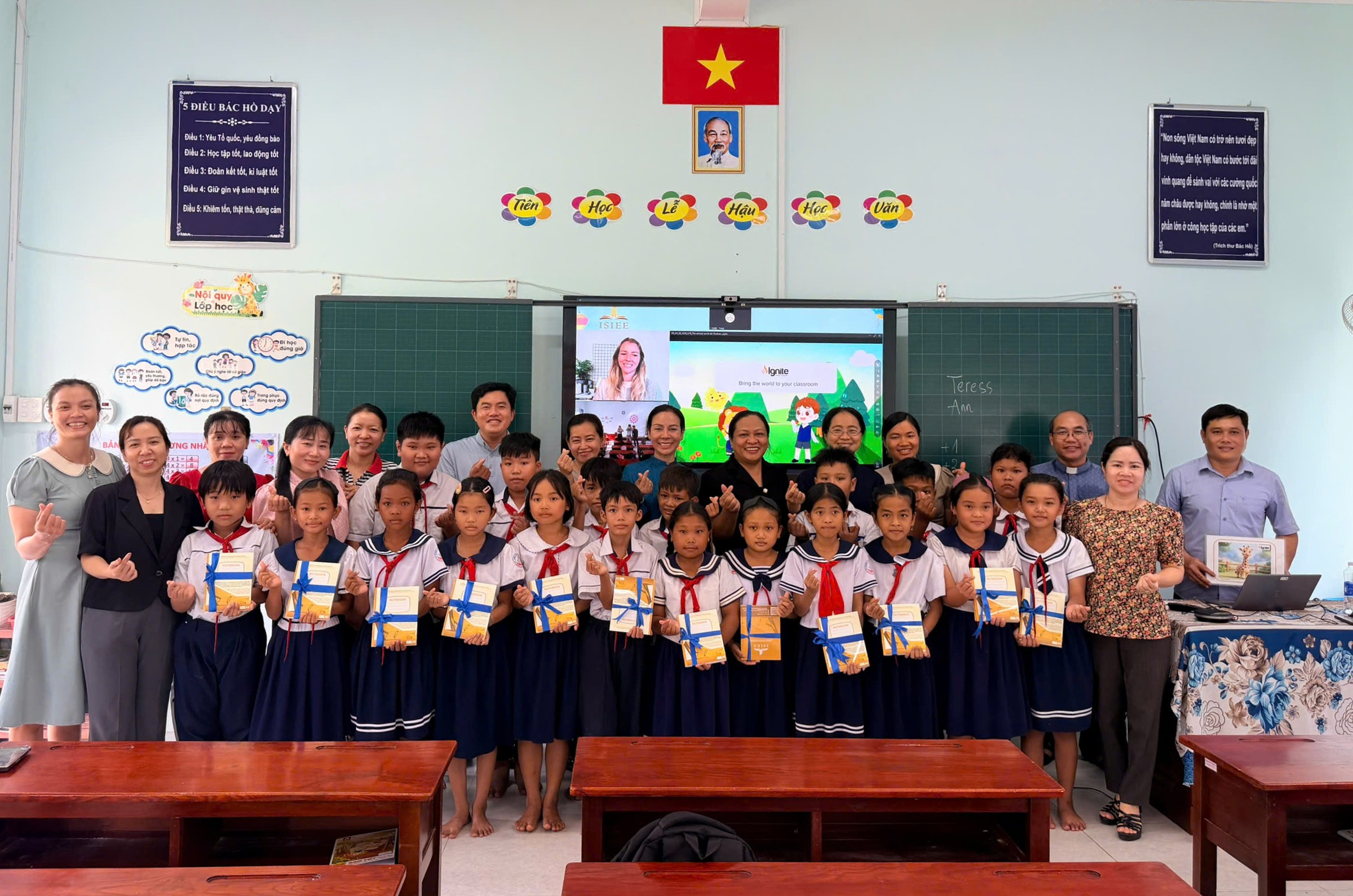
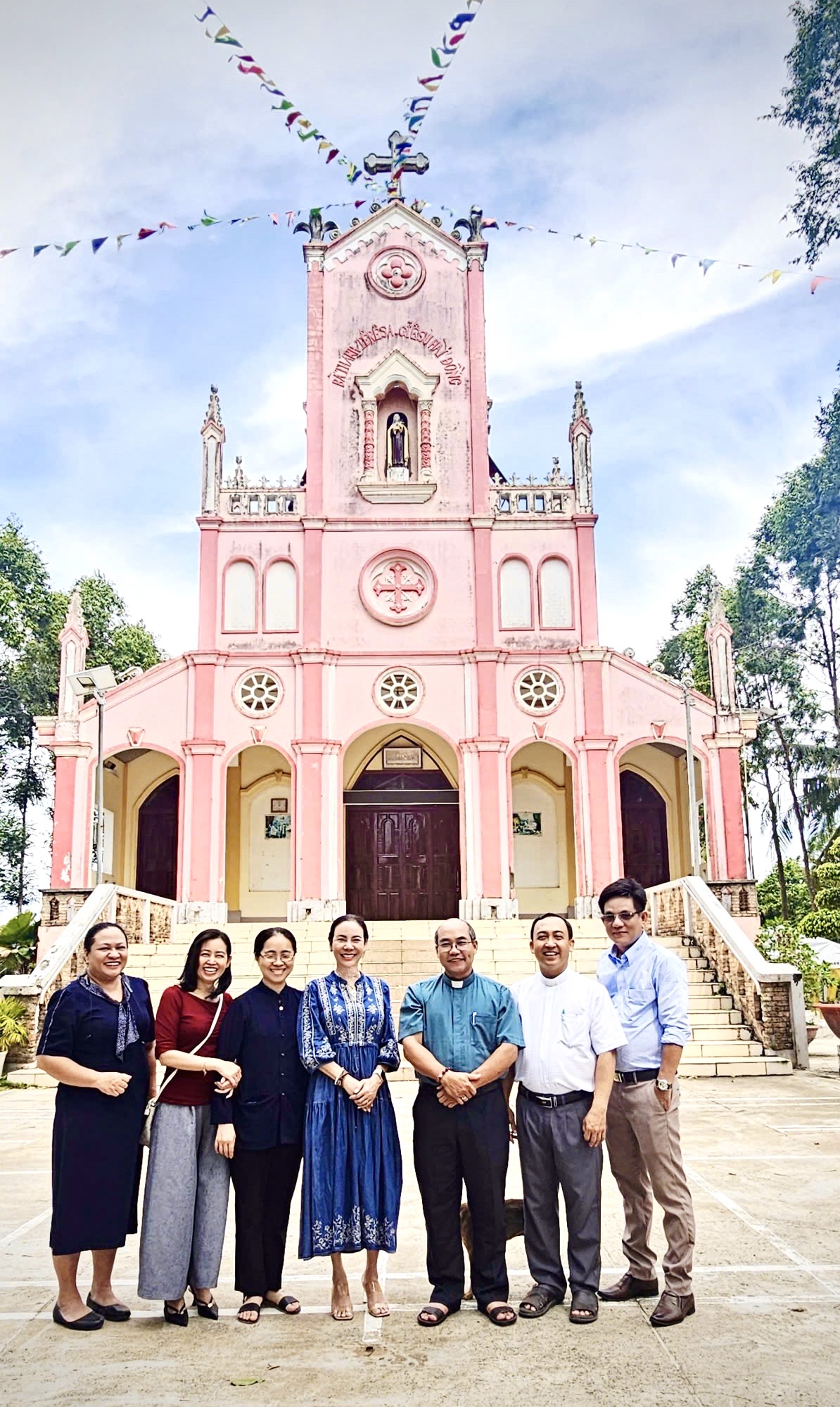
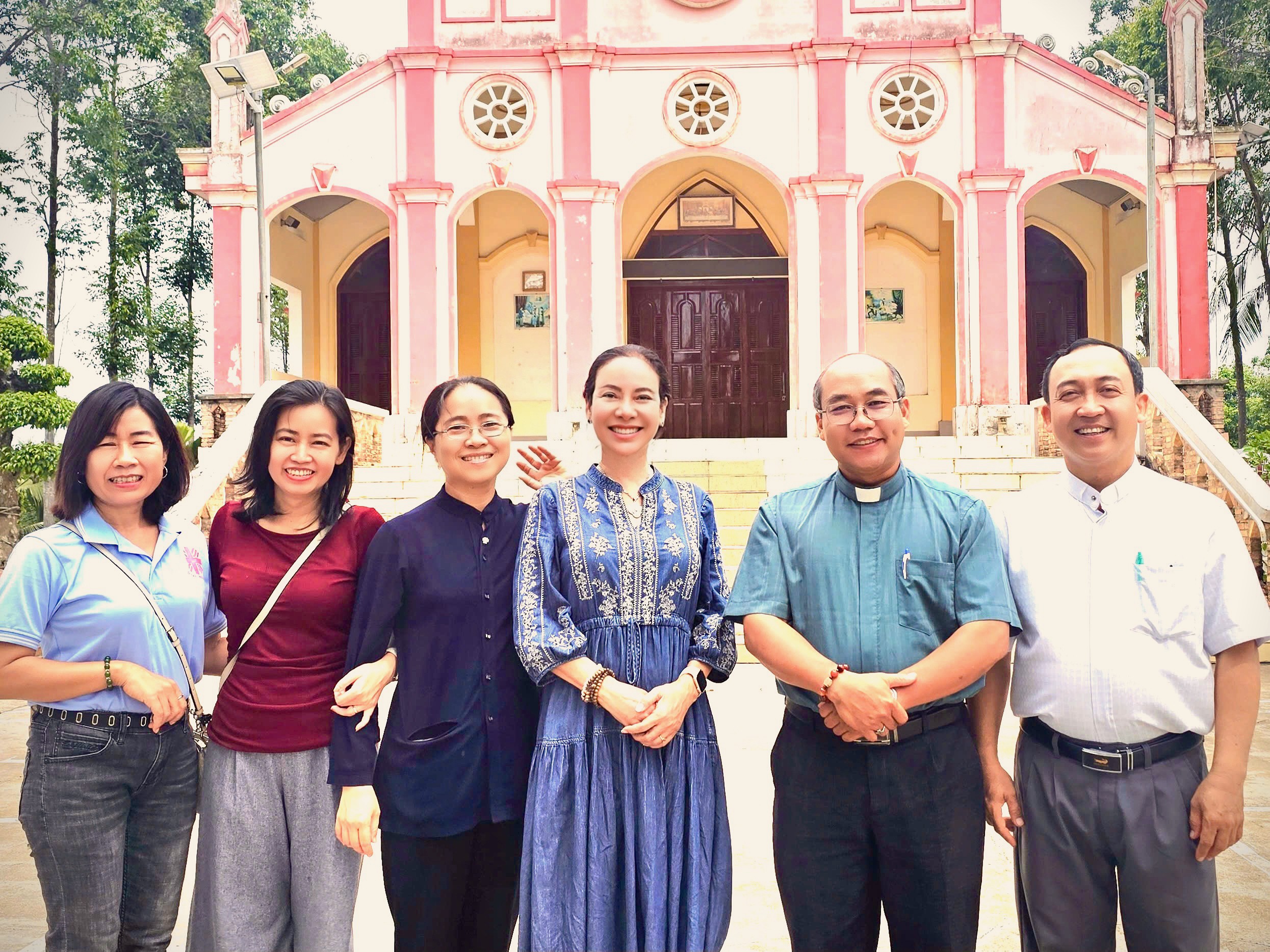
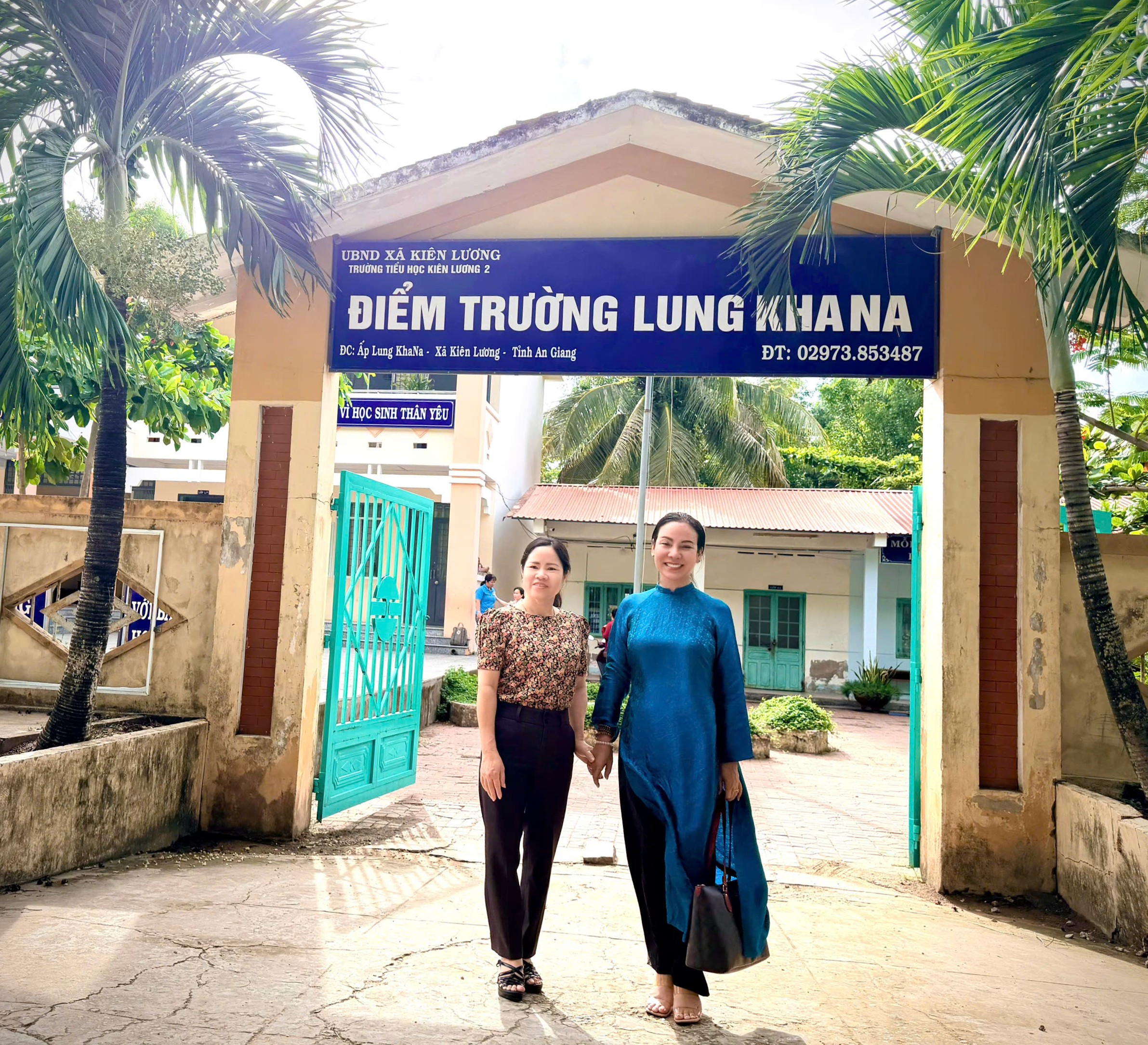
The delegation of the Little Roses Foundation, together with the International Institute for Education and Economic Research (ISIEE), representatives from Caritas Long Xuyen, and Kenh Xang, Kien Luong parishes, visited B Long An Primary School and Kien Luong 2 Primary School. The visit did not only focus on charity work, but more importantly, was to provide the students with a learning experience they had never had before: an experimental English listening and speaking lesson with foreign teachers, implemented according to the Online-Merge-Offline (OMO) co-teaching model.
The lesson began with the familiar shyness of rural children interacting online through a screen with an unfamiliar foreign teacher for the first time. However, after just a few minutes, under the lively guidance of the foreign teacher and the professional companionship of the Vietnamese teacher, that shyness gradually gave way to laughter, boldly raised hands asking to answer, and English sentences that were still broken but full of pride.
The Little Roses Foundation sponsored 300 English learning slots with native teachers for students at the two schools. All equipment serving classroom operations has also been fully provided. The International Institute for Education and Economic Research takes on the teaching responsibility for this project. For many families here, the most valuable thing is sometimes not only a modern curriculum, but also the opportunity to study under better conditions without being a financial burden on their families.
When Education Is Intertwined with Charity
Alongside educational activities, the Little Roses Foundation also presented two compassionate houses to two families in extremely difficult circumstances. The ISIEE Institute, in addition to accompanying the Little Roses Foundation in the educational project with contributions according to its capacity, also accompanies the Little Roses Foundation in building compassionate houses. Caritas Long Xuyen, together with the Little Roses Foundation, will grant 60 scholarships to disadvantaged students, provide medical examination and treatment for 300 local residents, and rebuild restrooms for the two schools.
It is difficult for young children to dream about further opportunities when the roof they live under every day is still leaking rain and cannot shield them from the sun. Therefore, before talking about the future, the delegation decided to start with the most foundational thing: a safe shelter so that they can grow up with peace of mind, study, and nurture their dreams.
The Answer to the Question: What Opportunities?
The answer perhaps does not lie in the application of technology or a mere educational program, but lies within the very people who are willing to accompany them: dedicated teachers, silent sponsors with hearts big enough to hold love, persevering charitable organizations, and a community that always leans toward human kindness. Together, we believe that no child is left behind just because they were born in a poor countryside.
The journey to Chau Doc and Kien Luong is a small trip, but carries a big faith: when education is connected with social responsibility and compassion, learning opportunities can come closer to students in every region of the country.