
Some journeys are measured not only in kilometres, but also in steep mountain slopes, the sound of rain falling through the forest, and the expectant eyes of children.
From 22 to 26 June 2026, representatives of the Institute for Studies of International Education and Economics (ISIEE), in collaboration with the Little Rose Charity Foundation, travelled to mountainous communities now administered by Da Nang City and formerly part of Quang Nam Province.
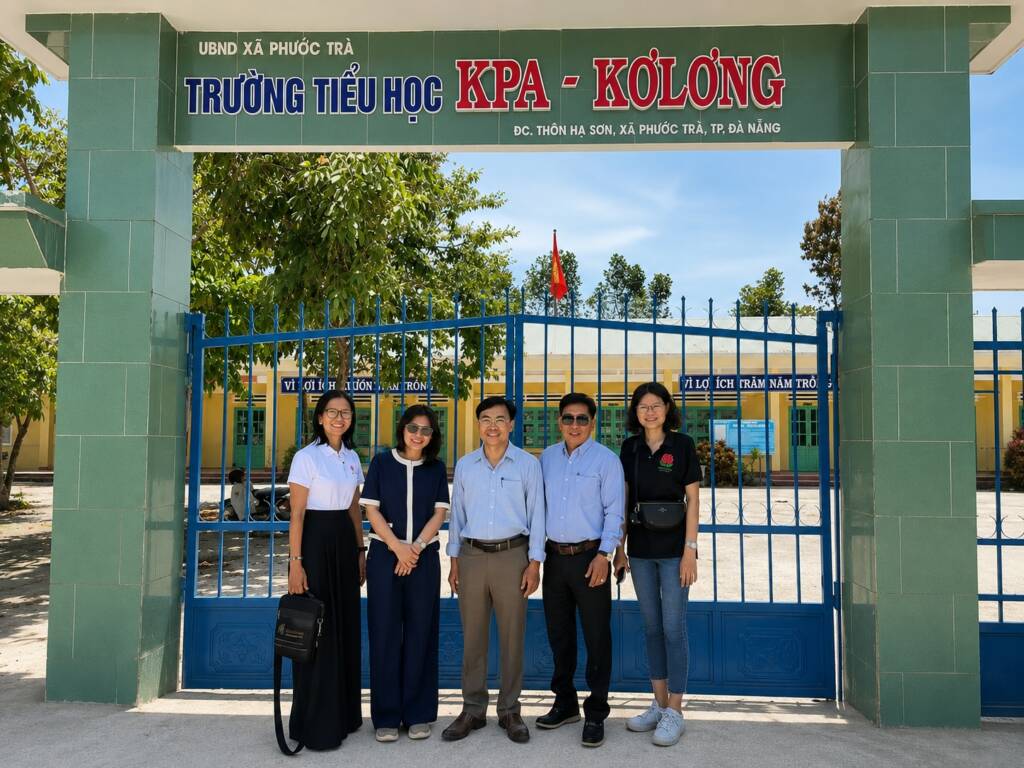
The journey took the delegation to Tra Van and Tra Leng communes in Nam Tra My District, as well as Phuoc Tra Commune in Hiep Duc District—remote areas where winding red-dirt roads lead to schools deep in the mountains.
This was no ordinary field visit.
It was a journey across mountain passes and streams in the pouring rain. It involved visits to individual school sites, meetings with principals and discussions with local authorities in remote communes—all in pursuit of an answer to a simple but pressing question:
How can students in these communities be given the opportunity to speak English at school?
Where Access to Education Remains a Daily Struggle
Tra Leng in Nam Tra My District is a name that remains etched in the country’s memory following the devastating landslide of 2020. Years later, the area continues to face profound challenges.
Some students must walk for hours along steep and precarious forest paths simply to reach school. Teachers arriving from the lowlands often find it difficult to remain in the area for extended periods.
For children in major cities, learning spoken English may be considered a routine part of education. For students here, however, the opportunity remains far beyond their reach.
On one day, heavy rain and the threat of landslides prevented the delegation from carrying out its school survey as planned. Instead, the team accompanied a village head up the hills to visit families in Tra Van Commune.
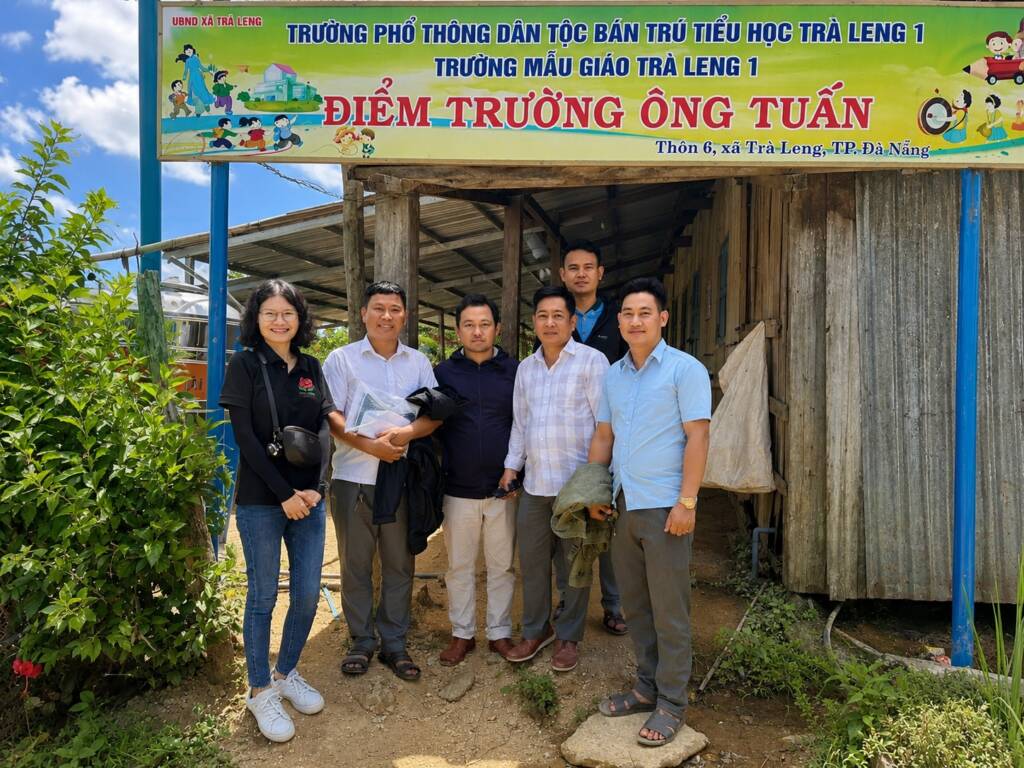
On another morning, the delegation trekked to a satellite campus of Tra Leng 1 Primary School, situated at an altitude of more than 1,500 metres. The mountain journey took nearly three hours.
The purpose was to see first-hand where the children studied, how they lived and what they needed in order to gain access to better educational opportunities.
A Shared Commitment to Nearly 500 Students
There were no ceremonial speeches and no formal opening event.
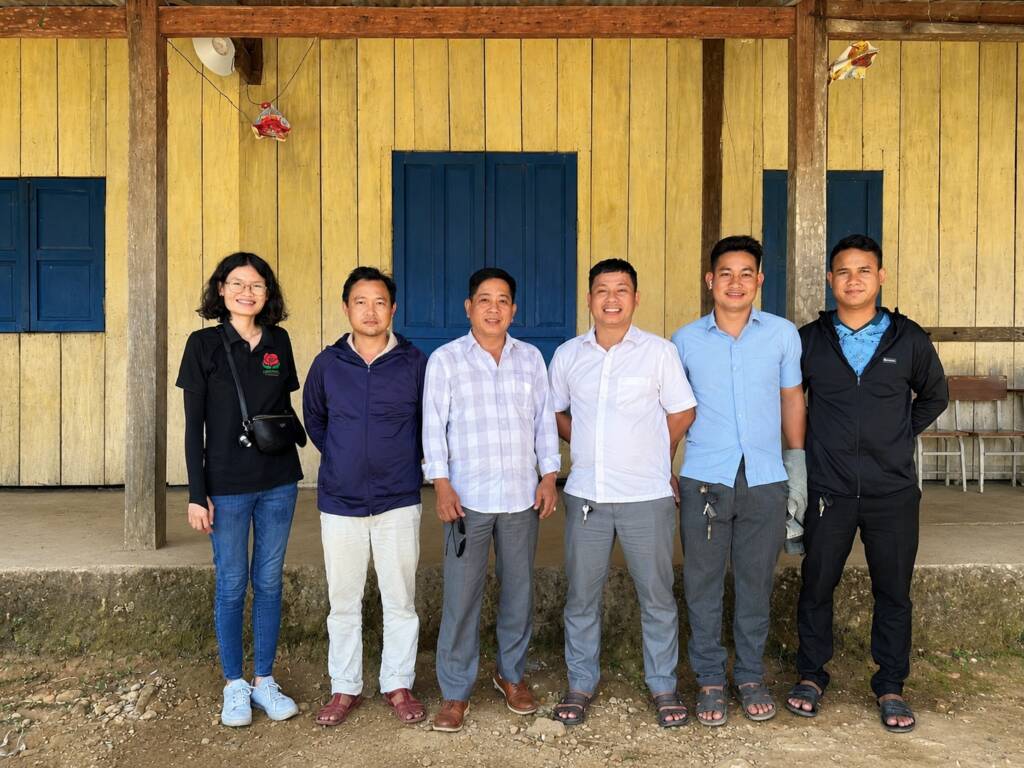
There were only quiet footsteps, straightforward discussions with school principals and local officials in Phuoc Tra Commune, and a shared conviction: nearly 500 students across four schools in the area deserve the opportunity to learn conversational English with native-speaking teachers.
Under the proposed programme, students will study through an Online-Merge-Offline, or OMO, learning model implemented by ISIEE. The model combines online instruction by international teachers with direct classroom support from Vietnamese teachers.
Before concluding the journey, the delegation also visited and held discussions with the Caritas Da Nang Office, opening up important opportunities for future coordination and cooperation.
Bringing Meaningful Interaction into Remote Classrooms
Drawing on the OMO model, ISIEE has researched, adapted and implemented an approach suited to the practical conditions of Vietnam, particularly in remote, mountainous and economically disadvantaged communities.
International teachers connect with students online, while Vietnamese teachers remain physically present in the classroom to guide and support them.
This approach enables students in isolated school sites to participate in genuine English lessons—to listen, speak and interact directly with native-speaking teachers, despite the geographical barriers separating their communities from major education centres.
And that journey began with footsteps through the rain-soaked forests of Tra Leng.
The first OMO English classes are expected to be introduced at these highland schools during the 2026–2027 academic year.
With the support of ISIEE and the Little Rose Charity Foundation, the students’ entire learning pathway will be fully sponsored. The goal is to ensure that access to English education is no longer a privilege reserved for children in better-resourced areas, but an opportunity available to every child, regardless of where they were born.
Every journey is a day lived with purpose.
And every new classroom opens another door of opportunity for children in Vietnam’s highlands.